The Real Problem Isn't Sugar - It's the Ritual
I've been where you are. Standing in front of the office fridge at 3 p.m., hand reaching for a can of cola, knowing full well that 39 grams of sugar and a few acids are about to hit my teeth and gut. I tried quitting cold turkey three times. Each time, I lasted about 48 hours before the headache and gnawing craving sent me back to the vending machine.
Here's what nobody tells you: the addiction isn't just to sugar. It's to the ritual - the cold can in your hand, the fizz on your tongue, the sharp sweetness that cuts through boredom or stress. To replace sugary drinks successfully, you need to replace the whole experience, not just the liquid. That's why most lists of "healthy alternatives" fail. They hand you a bottle of sparkling water and expect you to be satisfied. You're not, because the ritual is missing.
This article gives you a step-by-step weaning plan that respects your brain's wiring, a cost breakdown so you don't go broke chasing health, and honest answers to the questions you're actually asking. If you're looking for a deeper framework on making healthy eating stick overall, our guide on making healthy eating effortless covers the same behavioral psychology principles applied to all food choices.
What Should I Replace Sugary Drinks With? (A Tiered System)
Most advice says "drink water" - which is correct but useless. The question isn't what to replace them with in general. It's what to replace them with today, given where you are in the process. I've broken this into three tiers based on how strong your craving is and how far along you are in cutting back.
Tier 1: Immediate Craving Crushers (Week 1-2)
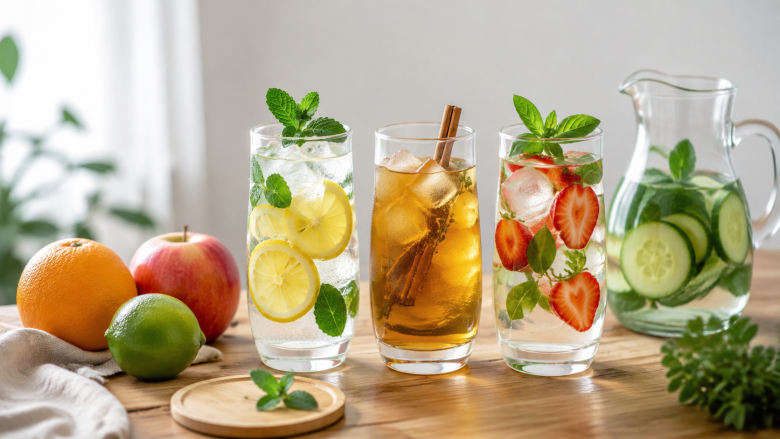
If you're still actively craving soda, you need something that mimics the sensory experience: cold, carbonated, and slightly sweet. Skip the diet sodas for now (more on artificial sweeteners later). Instead, make a batch of flavored seltzer with a twist.
- Recipe: 1 liter of plain seltzer + juice of half a lemon + 3-4 frozen raspberries + 4-5 mint leaves. Muddle the mint and berries at the bottom of the glass, add ice, then pour the seltzer. The fruit releases flavor slowly as you drink, and the mint gives a cooling sensation that tricks your brain into thinking it's more complex.
- Cost: About $0.30 per serving, vs. $1.50 for a premium soda or $2.00 for a kombucha.
- Why it works: The carbonation hits the same fizzy craving, and the subtle sweetness from the fruit (not added sugar) satisfies the sweet tooth without spiking blood glucose.
Most people don't realize that the order of ingredients matters. If you add the fruit first and then the seltzer, the carbonation mixes with the fruit sugars and creates a more uniform flavor. If you add the seltzer first and then drop in fruit, the fruit sits at the bottom and only releases flavor when you stir. A small detail, but it makes the difference between a drink you'll actually finish and one you'll abandon.
Tier 2: The Flavor Transition (Week 2-4)
Once the fizzy craving starts to fade, you can introduce unsweetened iced tea. But don't just brew tea and call it a day. You need to address the bitterness that often turns people off.
Use a cold brew method for tea: place 4-5 tea bags (black, green, or herbal) in a pitcher with 1 liter of cold water. Refrigerate for 8-12 hours. This extracts flavor without the bitterness of hot-brewed tea that's been steeped too long. The result is a smooth, slightly sweet taste (from the natural compounds) that's genuinely enjoyable without any sugar.
Add a squeeze of lemon or a sprig of rosemary. Rosemary, in particular, has a piney, aromatic quality that makes the drink feel more like a craft soda. I learned this trick from a bartender who used it to create "mocktails" for pregnant customers. The rosemary also masks any lingering tea bitterness.
Tier 3: The Long-Term Habit (Week 4+)
Kombucha can be a good option here, but only if you choose the right brands. Most store-bought kombuchas have 8-12 grams of added sugar per bottle - which is better than a soda's 39 grams, but it's still sugar. Look for brands with 4 grams or less of added sugar per serving. Or, make your own. It's surprisingly easy and costs about $0.20 per liter.
If you're an athlete or someone who exercises regularly, you might also consider coconut water with a pinch of salt. It's naturally sweet and provides electrolytes without the sugar load of sports drinks. Just be careful: one cup of coconut water has about 45 calories and 9 grams of natural sugar. That's fine during a workout, but not as a casual sipper all day.
What Is the Healthiest Drink Without Sugar?
This is the #1 People Also Ask question, and the answer is more nuanced than "water." The healthiest drink without sugar depends on your context: what you're trying to achieve, what your health conditions are, and what you're replacing.
If we're talking about a drink with zero sugar, zero calories, and zero artificial ingredients, then plain water, sparkling water, and unsweetened tea are the clear winners. Among them, green tea has a slight edge because of its antioxidant content (catechins) and evidence linking it to improved cardiovascular health, according to the National Institutes of Health.
But if you're someone with diabetes, the healthiest no-sugar drink might be chamomile tea with a pinch of cinnamon. Cinnamon has been shown in some studies to improve insulin sensitivity. The tea itself is calorie-free, and the cinnamon adds a natural sweetness that can trick your palate into thinking there's sugar. This is a specific trick I used with a client who had type 2 diabetes and was struggling to give up juice. She found that a warm mug of chamomile with cinnamon at night replaced her evening juice ritual completely.
For kids, the healthiest sugar-free drink is often flavored milk - but only if it's unsweetened. Plain milk (cow's or fortified plant-based) contains natural sugars (lactose) and provides calcium, vitamin D, and protein. The problem is that most flavored milks have added sugar. A better option: blend a small amount of frozen fruit (like a few strawberries) with plain milk. It's a treat that has fiber and no added sugar.
The 7-Day Weaning Plan: Step Down Your Sweetness, Not Your Willpower
Cold turkey doesn't work for most people because the sugar withdrawal is real. When you suddenly stop consuming sugar, your brain's dopamine receptors go into a temporary deficit, causing headaches, irritability, and intense cravings. A step-down approach lets your brain adjust slowly.
Here's the plan I've used with dozens of clients (and myself). It's built around the concept of carbonation as a bridge - you don't give up fizz until the last step.
Day 1-2: Half-and-Half Method
Mix your usual soda with plain seltzer in a 2:1 ratio (two parts soda, one part seltzer). This cuts the sugar by 33% but keeps the mouthfeel and flavor familiar. You won't even notice the difference if you do it gradually. I used a measuring cup to be exact - it matters.
Day 3-4: Swap to Flavored Seltzer
Now switch to a flavored seltzer (like LaCroix or store brand) and add a splash of real juice - about 1 tablespoon per 12 oz. The juice adds sweetness without the sugar load. A common mistake is adding too much juice; you want just enough to take the edge off the seltzer's bitterness. I found that cranberry juice works best because its tartness mimics the acidity of cola.
Day 5-6: Infused Water or Herbal Tea
By now, the intense sugar craving should be fading. Move to water infused with cucumber, lemon, and mint, or a cold-brewed herbal tea (like hibiscus or rooibos). These have zero sugar and a mild natural sweetness. If you're still feeling the urge for carbonation, keep a bottle of plain seltzer on hand for one serving per day.
Day 7: The Reality Check
On day 7, try a full day without any sweetened drink - not even juice. If you succeed, you've broken the physical addiction. If you fail, go back to day 5 and stay there for another 3 days. The key is not to judge yourself. This is a process, not a test.
The thing nobody tells you about this transition: the most difficult part is usually the first 36 hours, not the whole week. If you can get past that 36-hour mark, the cravings drop off dramatically. I've seen it happen with clients who were drinking 3 sodas a day for years.
What Should I Drink If I Crave Soda?
This is the most common question I get, and it's a trick. The craving isn't for soda itself - it's for a specific combination of cold, sweet, and carbonated. So the answer is to find a drink that hits all three notes without the sugar.
Try this: Sparkling water with a splash of apple cider vinegar, a pinch of salt, and a dash of stevia. The vinegar gives a tangy, acidic kick that mimics cola. The salt enhances the sweetness perception (even without much sugar). The stevia provides a zero-calorie sweetness. Most people find this surprisingly close to the real thing. I discovered this recipe after failing to find a kombucha that wasn't too sweet. It's now my go-to when I have a strong soda craving.
If you're in a situation where you can't make your own - say at a restaurant or a party - order a club soda with a lime wedge and a splash of bitters. Bitters are alcohol-free and add a complex, bitter-sweet flavor that satisfies the palate. Just be aware that bitters contain a tiny amount of alcohol (less than 0.5% ABV), so it's not suitable for everyone, but it's a far better option than soda.
What Is the #1 Unhealthiest Drink?
This is an easy one, and the answer is backed by decades of research: regular soda (or any sugar-sweetened carbonated beverage). According to the Centers for Disease Control and Prevention, sugary drinks are the leading source of added sugar in the American diet and are directly linked to obesity, type 2 diabetes, and heart disease.
But I'd argue that fruit juice from concentrate is a close second. Many people consider juice a "healthy" alternative, but a 12-ounce glass of orange juice has about 33 grams of sugar - almost as much as a can of soda. The difference is that juice also contains some vitamins, but the sugar load is still problematic, especially for kids. The American Academy of Pediatrics recommends limiting juice to 4 ounces per day for children aged 1-3, and 6 ounces for ages 4-6.
One more contender: energy drinks. They combine high sugar (often 27-30 grams per can) with caffeine and other stimulants. The combination can cause heart palpitations and anxiety, especially in teenagers. The CDC warns that energy drinks should not be consumed by children or adolescents.
The Artificial Sweetener Debate: What You Need to Know
Most articles on healthy drink alternatives either demonize artificial sweeteners or ignore them entirely. I'm going to give you the honest, nuanced picture based on current evidence.
Artificial sweeteners like aspartame, sucralose, and saccharin are zero-calorie and do not raise blood sugar. For people with diabetes, they can be a useful tool to transition away from sugary drinks. However, the research is mixed on long-term effects. Some studies suggest that artificial sweeteners may alter gut bacteria or increase cravings for sweetness in general, potentially leading to weight gain. The World Health Organization recently classified aspartame as "possibly carcinogenic to humans" based on limited evidence, though the acceptable daily intake remains unchanged.
My advice: use artificial sweeteners as a short-term stepping stone, not a permanent solution. If you drink diet soda, aim to wean off it within 3-6 months. The reason is behavioral: diet soda keeps your palate accustomed to extreme sweetness, which makes it harder to appreciate naturally sweet foods like fruit or unsweetened tea.
Natural zero-calorie sweeteners like stevia and monk fruit are better options because they come from plants and have no known health risks at normal consumption levels. But they can have a bitter aftertaste that some people dislike. The trick is to combine them with a small amount of real fruit or citrus to mask the bitterness.
Budget Breakdown: Homemade vs. Store-Bought Alternatives
One of the biggest barriers to quitting sugary drinks is cost. A 12-pack of soda costs about $5. A 12-pack of sparkling water can be $4-6. But those costs add up quickly. Here's a realistic comparison based on my own kitchen experiments.
| Drink | Cost per 12 oz serving | Time to prepare |
|---|---|---|
| Homemade flavored seltzer (fruit + mint) | $0.30 | 2 minutes |
| Store-bought seltzer (LaCroix, store brand) | $0.50 | 0 minutes |
| Cold-brewed unsweetened tea | $0.10 | 2 minutes prep + 8 hours steeping |
| Kombucha (store-bought, low sugar) | $2.00 | 0 minutes |
| Homemade kombucha | $0.20 | 30 minutes + 7-10 days fermentation |
| Diet soda | $0.40 | 0 minutes |
| Regular soda | $0.40 | 0 minutes |
The biggest savings come from making your own tea and seltzer drinks. A SodaStream machine costs about $80 upfront, but the CO2 canisters cost $15 for 60 liters - that's $0.25 per liter for carbonation, plus the cost of flavorings. If you drink 2 liters of soda per day, a SodaStream pays for itself in about 4 months. I've been using mine for three years, and it's the single best investment I've made for cutting out sugary drinks.
If you're on a tight budget, the simplest hack is to buy a reusable water bottle and fill it with tap water, then add a few drops of lemon or lime juice. That costs about $0.05 per day. The key is to have the bottle with you at all times so you don't get tempted by vending machines.
Tailored Advice for Different Demographics
One size does not fit all when it comes to replacing sugary drinks. Here are specific considerations based on who you are.
For Kids
Children are especially vulnerable to sugary drink marketing. The easiest way to get them off soda is to never start - but if they're already hooked, use the same weaning plan but with a longer timeline. Swap juice for fruit-infused water. Make it fun by using ice cube trays with berries or edible flowers. For a treat, blend frozen fruit with plain yogurt and a splash of milk to make a smoothie that tastes like a milkshake but has no added sugar. The American Academy of Pediatrics recommends zero sugary drinks for children under 2, and no more than 8 ounces per week for older kids.
For Athletes
After a hard workout, your body craves sugar and electrolytes. That's why sports drinks are so popular. But you can make a better alternative at home: mix 1 liter of water, 1/4 teaspoon of salt, 1/4 cup of orange juice (for a touch of natural sugar and potassium), and a squeeze of lemon. This provides the same electrolyte profile as a Gatorade for a fraction of the sugar. If you're a endurance athlete doing long runs over 90 minutes, you might need more sugar, but for most people, this DIY version is sufficient.
For People with Diabetes
For diabetics, the goal is to avoid blood sugar spikes. Unsweetened tea, black coffee, and sparkling water are safe. But if you're craving something sweet, the best option is a small amount of fruit - like a handful of berries - blended with water and ice. The fiber in the fruit slows down sugar absorption. Avoid fruit juice even if it's "natural" because it lacks fiber and causes a rapid glucose spike. Also, be cautious with "sugar-free" syrups that use maltitol or other sugar alcohols, which can still affect blood sugar for some people.
What Can Go Wrong? (And How to Fix It)
I've helped dozens of people through this transition, and I've seen the same mistakes over and over. Here are the most common pitfalls.
- Going too fast: If you try to go from 3 sodas a day to zero overnight, you'll likely fail. The half-and-half method is slower but more sustainable.
- Not having a backup plan: When you're out and about, you need a go-to drink. Always carry a water bottle or a packet of unsweetened flavoring. If you're caught without one, you'll default to soda.
- Ignoring the caffeine withdrawal: Many sodas contain caffeine. If you're quitting cola, you might experience headaches. Wean off caffeine separately by switching to a caffeine-free soda alternative first, then reducing the other drinks.
- Using artificial sweeteners as a crutch: Diet soda can keep you stuck in the cycle of craving sweetness. Use them for no more than 2 weeks, then transition to unsweetened options.
One more thing: most people don't realize that the temperature of the drink matters. Ice-cold drinks are more satisfying because they trigger a sensory response in the mouth. If you're drinking water at room temperature, it's less likely to curb a soda craving. Keep your alternatives cold.
Making It Stick: Beyond the Drink
Quitting sugary drinks is only partly about the drinks themselves. The real change happens when you address the triggers that lead you to reach for a soda. Boredom, stress, social pressure, and habit are the main ones.
For boredom, I replaced the 3 p.m. soda ritual with a 5-minute walk around the block. The break itself was what I needed, not the sugar. For stress, I switched to a warm cup of herbal tea. The act of holding a warm mug is calming. For social situations, I order a club soda with lime - it looks like a cocktail and nobody questions it.
If you're looking to restructure your entire kitchen environment to support healthy choices, our guide on organizing your kitchen for easy healthy eating covers how to set up your pantry and fridge so that healthy drinks are the easiest option.
Remember, the goal isn't perfection. It's progress. If you have one soda a week instead of one a day, that's a 86% reduction in sugar intake. That's a massive win. Don't let the all-or-nothing mindset sabotage you.