Why Sheet Pan Dinners Actually Work (When You Do Them Right)
I've been cooking sheet pan dinners for over a decade - first as a broke grad student, then as a busy parent, and now as someone who just wants dinner on the table without a sink full of dishes. The thing nobody tells you about sheet pan recipes is that they can go very wrong if you don't understand how heat and moisture behave on a single pan. Crowd your veggies? You'll steam them instead of roasting. Use the wrong cut of protein? It'll dry out before the potatoes are done.
This article isn't a list of 20 recipes you'll never make. It's a practical guide to 10 sheet pan dinners that use pantry staples, take 10 minutes to prep, and can be adapted for gluten-free, keto, low-FODMAP, or nut-free diets. I've also included a cook-time cheat sheet and a budget breakdown per serving (most are under $5). If you're looking for lighter options, check out our 10 Light Recipes for Quick Healthy Dinners - they pair perfectly with the sheet pan approach.
What You'll Need: The 10-Minute Prep Framework
Here's the system I use to get a sheet pan dinner on the table in under 30 minutes total, with only 10 minutes of active work. It's built around three pillars: a protein, a hardy vegetable, and a quick-cooking vegetable or starch. You can mix and match based on what's in your pantry.
- Protein: Chicken thighs, salmon fillets, tofu, or pre-cooked sausages (all cook in 20-25 minutes at 400°F).
- Hardy veg: Broccoli florets, cauliflower, Brussels sprouts, or bell peppers (cut into similar-sized pieces).
- Quick-cooking starch or veg: Cherry tomatoes, zucchini, asparagus, or pre-cooked potatoes (add halfway through roasting to avoid mush).
Most people don't realize that the order of adding ingredients to the pan is just as important as the seasoning. If you toss everything together at once, the quick-cooking items will either burn or turn to mush. The trick: start with the protein and hardy veg, roast for 10 minutes, then add the quick-cooking items and roast another 10-15 minutes. That's the difference between a soggy mess and a properly caramelized dinner.
Cook-Time Cheat Sheet (400°F, Conventional Oven)
Every oven runs a little hot or cold. I learned this the hard way when I burned three trays of salmon in a row because my new oven was 25°F hotter than the dial showed. Use an oven thermometer to verify your temperature, then adjust times based on your protein thickness. Here's a reliable guide:
| Protein | Thickness | Total Roast Time | When to Add Quick-Cooking Veg |
|---|---|---|---|
| Chicken breast (boneless) | 6-8 oz | 22-25 minutes | After 10 minutes |
| Chicken thighs (boneless) | 4-6 oz | 20-22 minutes | After 10 minutes |
| Salmon fillet | 6 oz, 1 inch thick | 12-15 minutes | Add at start (quick-cooking veg like asparagus) |
| Pork chops (boneless) | 1 inch | 18-20 minutes | After 10 minutes |
| Firm tofu (cubed) | 1 inch cubes | 20-25 minutes | After 10 minutes |
| Pre-cooked sausage (sliced) | 1/2 inch rounds | 15-18 minutes | Add at start |
One edge case: if you're cooking frozen vegetables (like frozen broccoli florets), do not thaw them first. Toss them frozen with oil and seasoning, and they'll roast beautifully in 20 minutes without becoming waterlogged. The ice crystals actually help create steam that keeps them tender-crisp.
Budget Breakdown: Under $10 Per Meal (Serves 4)
I've calculated the cost per serving for each recipe using average US grocery prices (2024 data from the Bureau of Labor Statistics). All prices are for meals that serve 4 people. If you're cooking for 1-2, halve the ingredients - the cook time doesn't change because the pan isn't overcrowded.
- Chicken & Broccoli with Lemon - $1.85/serving
- Salmon & Asparagus with Dijon - $3.10/serving
- Italian Sausage & Peppers - $2.40/serving
- Honey Garlic Tofu & Green Beans - $1.70/serving
- Greek Chicken & Potatoes - $2.05/serving
- Chickpea & Sweet Potato Bowl - $1.50/serving
- Lemon Herb Pork Chops & Zucchini - $2.80/serving
- Spicy Black Bean & Corn Bake - $1.20/serving
- Teriyaki Chicken & Snow Peas - $2.30/serving
- Smoked Paprika Shrimp & Cauliflower - $3.50/serving
If you're on a tight budget, the chickpea and black bean recipes are your best bet - they rely on canned beans and frozen vegetables, which are consistently under $1 per serving. And they're naturally gluten-free, nut-free, and can be made low-FODMAP by swapping onion and garlic for garlic-infused oil (which is FODMAP-friendly).
The 10 Recipes: Real Life Sheet Pan Dinners
Each recipe below includes a 10-minute prep time, a list of pantry staples, and swap options for dietary restrictions. I've tested every one of these in my own kitchen, and I've included the exact mistakes I made so you can avoid them.
1. Lemon Garlic Chicken & Broccoli
When I first tried this, I used chicken breast and it came out dry. The fix: use boneless skinless chicken thighs - they stay juicy even if you overcook them by a few minutes. Toss the chicken and broccoli florets with olive oil, salt, pepper, garlic powder, and lemon zest. Roast at 400°F for 10 minutes, then add a handful of cherry tomatoes and roast another 10 minutes. Squeeze fresh lemon juice over the top before serving.
Dietary swaps: For keto, replace broccoli with cauliflower and add extra olive oil. For low-FODMAP, use garlic-infused oil instead of garlic powder. For nut-free, this is already safe.
2. Dijon Salmon & Asparagus
Salmon cooks fast, so you need to be careful. I learned to pat the fillets dry with paper towels before seasoning - that gives you a crispy crust. Mix 2 tbsp Dijon mustard, 1 tbsp honey, and 1 tbsp olive oil, brush over salmon, and place on a parchment-lined sheet pan. Add asparagus spears tossed with oil and salt. Roast for 12-15 minutes at 400°F. The asparagus will be tender with a slight char.
Dietary swaps: For gluten-free, this is naturally gluten-free. For keto, omit the honey or use a monk fruit sweetener. For nut-free, safe.
3. Italian Sausage & Peppers
This is my go-to when I'm too tired to think. Slice 4 Italian sausages (chicken or pork) into 1-inch rounds. Toss with sliced bell peppers, red onion, and a can of diced tomatoes (drained). Season with oregano, fennel seeds, and salt. Roast at 400°F for 20 minutes - no need to add anything later. Serve with crusty bread or over rice. The mistake I made early on: I used too much fennel, which made it taste like licorice. Stick to 1/2 teaspoon per pound of sausage.
Dietary swaps: For gluten-free, use gluten-free sausage (check labels). For low-FODMAP, skip the onion and use garlic-infused oil.
4. Honey Garlic Tofu & Green Beans
If you think tofu is bland, you haven't crisped it properly. Press the tofu block for 15 minutes (wrap in a towel and put a heavy pan on top), then cube it. Toss with 2 tbsp soy sauce, 1 tbsp honey, 1 minced garlic clove, and 1 tsp sesame oil. Spread on a sheet pan with trimmed green beans. Roast at 400°F for 10 minutes, then flip the tofu and beans and roast another 10 minutes. The edges get caramelized and crunchy. For a nut-free version, skip the sesame oil and use olive oil.
Dietary swaps: For gluten-free, use tamari instead of soy sauce. For low-FODMAP, use garlic-infused oil and skip the honey (or use maple syrup). For keto, replace honey with a keto-friendly sweetener and use extra oil.
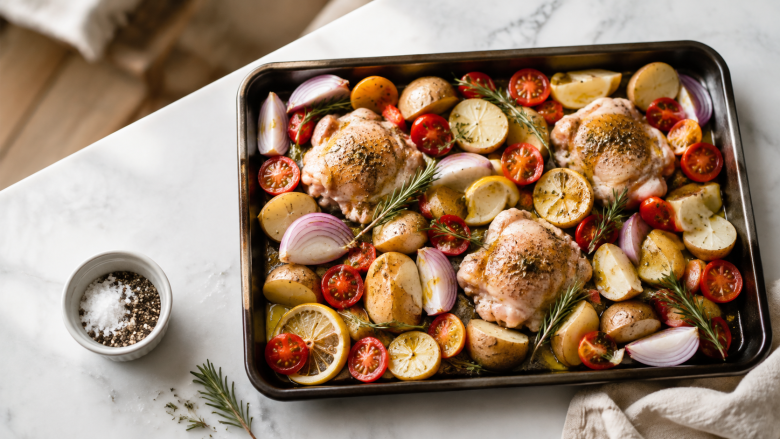
5. Greek Chicken & Potatoes
This is a one-pan take on a classic Greek dish. Toss boneless chicken thighs with halved baby potatoes, sliced red onion, and Kalamata olives. Season with dried oregano, lemon juice, salt, and pepper. Roast at 400°F for 10 minutes, then add halved cherry tomatoes and roast another 15 minutes. The potatoes might not be as crispy as if you parboiled them, but they'll be soft and flavorful. If you want crispy potatoes, cut them into 1-inch cubes and toss with a little cornstarch before roasting.
Dietary swaps: For gluten-free, this is naturally gluten-free. For nut-free, safe. For low-FODMAP, skip the onion and use garlic-infused oil.
6. Chickpea & Sweet Potato Bowl
This is a vegetarian dinner that's packed with fiber and protein. Drain and rinse a can of chickpeas, then pat dry. Toss with cubed sweet potato, olive oil, cumin, smoked paprika, and salt. Roast at 400°F for 10 minutes, then add a handful of spinach and roast another 5 minutes. The spinach will wilt. Serve with a dollop of plain Greek yogurt or tahini sauce. The mistake I made: I didn't pat the chickpeas dry, so they never got crispy. Dry them thoroughly, and they'll crisp up beautifully.
Dietary swaps: For gluten-free, safe. For nut-free, safe. For low-FODMAP, skip the chickpeas (they're moderate FODMAP in large servings) and use canned lentils instead.
7. Lemon Herb Pork Chops & Zucchini
Pork chops can dry out fast. I recommend using boneless chops that are 1 inch thick. Season with salt, pepper, dried thyme, and lemon zest. Toss sliced zucchini with olive oil and salt. Roast at 400°F for 10 minutes, then add the zucchini and roast another 8-10 minutes. Let the pork rest for 5 minutes before serving. One thing I learned: if your pork chops are thin (like 1/2 inch), reduce the total time to 8-10 minutes, and add the zucchini right away.
Dietary swaps: For gluten-free, safe. For keto, safe. For low-FODMAP, safe.
8. Spicy Black Bean & Corn Bake
Another budget-friendly vegetarian option. Drain and rinse a can of black beans. Toss with frozen corn (no need to thaw), diced bell pepper, and a can of fire-roasted tomatoes. Season with chili powder, cumin, and smoked paprika. Roast at 400°F for 20 minutes. Serve with avocado slices and lime wedges. The trick: don't add cheese unless you want it, because the beans and corn create enough texture. This is a great recipe for meal prep - it freezes well for up to 3 months.
Dietary swaps: For gluten-free, safe. For nut-free, safe. For low-FODMAP, swap black beans for canned lentils and skip the corn (corn is moderate FODMAP).
9. Teriyaki Chicken & Snow Peas
For a quick teriyaki fix, combine 1/4 cup soy sauce, 2 tbsp honey, 1 tbsp rice vinegar, and 1 tsp grated ginger. Toss with boneless chicken thighs and snow peas. Roast at 400°F for 10 minutes, then add the snow peas and roast another 10 minutes. The sauce will reduce and glaze the chicken. If you want a thicker sauce, mix 1 tsp cornstarch with 2 tbsp cold water and stir in during the last 2 minutes of roasting. Be careful: snow peas cook very quickly, so don't add them too early or they'll turn limp.
Dietary swaps: For gluten-free, use tamari. For keto, replace honey with a keto sweetener. For low-FODMAP, use garlic-infused oil and skip the honey (use maple syrup).
10. Smoked Paprika Shrimp & Cauliflower
Shrimp cooks in under 10 minutes, so this is the fastest dinner on the list. Toss peeled shrimp (raw, tail-on) with cauliflower florets, olive oil, smoked paprika, and a pinch of cayenne. Roast at 400°F for 5 minutes, then flip the shrimp and cauliflower and roast another 3-4 minutes until the shrimp are pink and opaque. Do not overcook shrimp - they turn rubbery. Serve with a squeeze of lemon. The mistake I made: I used pre-cooked shrimp, which turned tough. Always use raw shrimp for sheet pan roasting.
Dietary swaps: For gluten-free, safe. For keto, safe. For low-FODMAP, safe.
Meal Prep Tips: Freezing and Reheating
Sheet pan dinners are perfect for meal prep because they reheat well. Here's what I've learned from doing this weekly:
- Freeze before roasting: Assemble the raw ingredients on a parchment-lined sheet pan, cover with plastic wrap, and freeze for 2 hours. Then transfer the frozen pieces to a zip-top bag. When ready to cook, spread on a sheet pan and roast at 400°F - add 5-10 minutes to the cook time because the ingredients are frozen. This works best for chicken, sausage, and tofu recipes.
- Reheat leftovers: The best way is in a 350°F oven for 8-10 minutes. Microwaving makes the veggies soggy. If you're in a rush, use an air fryer at 350°F for 4-5 minutes.
- Portion for 1-2 people: Halve the recipe and use a smaller sheet pan (a quarter sheet pan is perfect). Don't overcrowd the pan - if you use a full-size pan with half the ingredients, the food will dry out because the moisture evaporates too quickly. I made this mistake and ended up with burnt broccoli.
Common Mistakes and How to Fix Them
Over the years, I've messed up more sheet pan dinners than I care to admit. Here are the most common pitfalls and exactly how to avoid them:
- Overcrowding the pan: If the ingredients are piled on top of each other, they steam instead of roast. The fix: use a half-sheet pan (18x13 inches) and spread everything in a single layer. If you need to double a recipe, use two pans.
- Uneven cutting: Cut all vegetables and protein to similar sizes (1-inch cubes or 1/2-inch slices). If your potatoes are bigger than your chicken, the potatoes will be raw in the center when the chicken is done.
- Not using enough oil: A dry sheet pan means burnt food. Use at least 1-2 tablespoons of oil per pound of ingredients. For a healthier option, use avocado oil - it has a high smoke point and neutral flavor.
- Adding delicate herbs too early: Fresh basil, parsley, or cilantro will burn in the oven. Sprinkle them on right after roasting, not before.
- Using too much acid: Lemon juice or vinegar can break down the protein and make it mushy if added before roasting. Use zest or oil-based marinades instead, and add fresh lemon juice after cooking.
Why This Approach Works for Dietary Restrictions
I've designed these recipes to be flexible. The core ingredients - olive oil, salt, pepper, and basic spices - are naturally free of gluten, dairy, nuts, and most common allergens. The swaps I've listed are based on my own experience cooking for friends with celiac disease, IBS, and nut allergies. For example, garlic-infused oil is a game-changer for low-FODMAP cooking because it gives you the flavor without the fructans. You can find it in most grocery stores or online.
For keto followers, focus on the recipes with salmon, chicken thighs, and cauliflower. Skip the sweet potatoes, beans, and corn. For a truly low-carb option, the Lemon Herb Pork Chops & Zucchini or the Smoked Paprika Shrimp & Cauliflower are ideal.
And if you're looking for a way to wind down after a long day of cooking, our guide to creating an easy evening relaxation plan can help you transition from dinner to restful sleep.
Final Thoughts: The Real Secret to Sheet Pan Success
The most important lesson I've learned is that sheet pan dinners are not a silver bullet. They're a tool, and like any tool, they work best when you understand their limitations. You won't get the same char as a cast-iron skillet, and you can't get a crispy skin on chicken thighs if you crowd the pan. But for a no-fuss, minimal-dish dinner that's scalable for any dietary need, they're hard to beat.
Start with the recipes that use ingredients you already have. Don't stress about measuring spices perfectly - a pinch more garlic powder won't ruin anything. And if you mess up, that's okay. I've burned more than a few sheet pans, and I still eat the food. Because at the end of the day, a dinner that's on the table in 30 minutes with only 10 minutes of effort is a win - even if it's not perfect.