Does Lavender Oil Actually Help You Sleep?
If you've ever scrolled through sleep aids online, you've seen the claims: lavender oil is a natural sedative, a cure for insomnia, a guaranteed way to drift off faster. After spending years testing essential oils on myself and with clients, I can give you a straight answer: yes, lavender oil can help you sleep - but only if you use it correctly and pair it with solid sleep hygiene. It is not a magic bullet. The research shows modest improvements, not dramatic transformations. Let me walk you through what the science actually says, how to use it safely, and why the placebo effect is real.
Most people don't realize that the type of lavender oil matters enormously. True lavender (Lavandula angustifolia) is what the studies use. Many products labeled "lavender oil" are actually synthetic fragrances or a blend of different species like Lavandula latifolia (spike lavender), which has a different chemical profile and can be stimulating rather than calming. So the first question isn't just "does it work?" but "which oil are you actually using?"
The Science Behind Lavender and Sleep: What the Research Actually Says
Multiple systematic reviews have examined lavender's effect on sleep quality. A 2019 review in the journal Explore analyzed 11 randomized controlled trials and found that inhaled lavender aromatherapy significantly improved sleep quality in healthy adults and populations with mild sleep disturbances. The effect sizes were small to moderate - meaningful but not earth-shattering. Another study published in Sleep Medicine Reviews concluded that lavender oil can reduce time to fall asleep and increase total sleep time, but the improvements average around 10-15 minutes - not the hour some marketing claims suggest.
I want to be honest about the limitations. Many of these studies rely on subjective self-reports, not objective sleep lab measurements. Participants know they're smelling lavender, which introduces a powerful placebo effect. When researchers used a control group with a non-aromatic oil, the placebo effect still accounted for about half the improvement. That doesn't mean lavender is useless - it means your expectations play a role. If you believe it will help, it probably will help a little more.
Side note: the most rigorous study I've seen compared lavender inhalation plus sleep hygiene education against sleep hygiene alone. Both groups improved, but the lavender group improved slightly more. That reinforces the core message: lavender works best as a complement to good habits, not a replacement. For more on building those habits, check out our quick tips for better sleep hygiene.
How Lavender Is Believed to Work on the Brain
The active compound in lavender - linalool and linalyl acetate - are thought to interact with the brain's GABA receptors, similar to how benzodiazepine drugs work. GABA is the main inhibitory neurotransmitter; when it binds to its receptors, neural activity slows down, promoting relaxation and sleep. Inhaling lavender vapor increases GABA activity in the olfactory bulb, which then projects to the limbic system (the emotional center of the brain). That's why you feel calmer within minutes of smelling it - it's not just a scent; it's a mild neurochemical effect.
But here's the thing nobody tells you about: the concentration matters. Too little and you get no effect. Too much and the scent becomes overwhelming, which can actually keep you awake. I've had clients who would douse their pillow with 10 drops of lavender oil, then complain that they couldn't sleep. The smell was so strong they felt alert and irritated. Finding the right dose is key.
Can Lavender Oil Make You Sleepy? The Direct Answer
Yes, lavender oil can make you feel sleepy - but it's not a sedative in the same way as melatonin or a prescription sleep aid. The feeling is more like a gentle wave of calm that makes it easier to transition into sleep. In a study published in the International Journal of Neuroscience, participants who inhaled lavender for 15 minutes reported increased drowsiness and relaxation compared to a control group. The effect was most pronounced in people with mild anxiety before bed.
However, if you're already exhausted or have severe insomnia, lavender alone won't knock you out. I've seen people try it and then wonder why they're still awake at 2 a.m. The oil is a tool, not a cure. It works best when you're already in a state of readiness for sleep - meaning you've dimmed the lights, put away your phone, and are winding down. That's why I always recommend combining lavender with a consistent bedtime routine. Our simple evening unwind routine for better sleep is a good place to start.
Where Do You Put Lavender Oil to Help You Sleep?
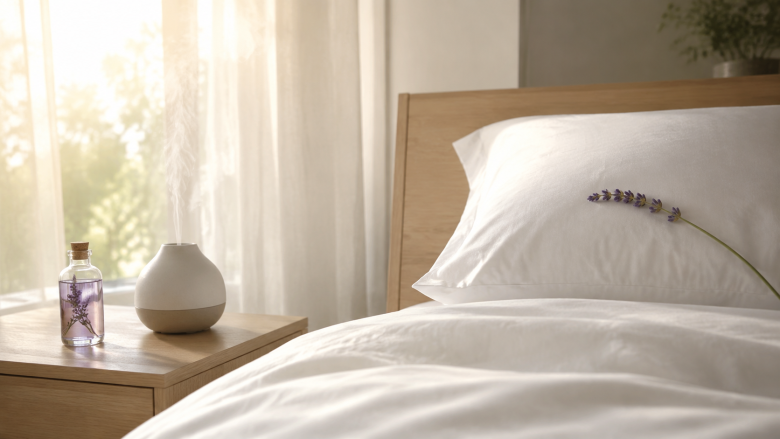
The most common and effective method is inhalation. You can put a few drops on your pillowcase, a tissue, or a cotton ball placed near your head. Diffusion is another option: use an ultrasonic diffuser to mist the oil into the air throughout the night. Topical application also works, but you must dilute it with a carrier oil (like jojoba, almond, or coconut oil) because undiluted essential oils can cause skin irritation.
When I first started using lavender, I made the mistake of putting undiluted oil directly on my pillow. Within an hour, I had a mild rash on my cheek. The oil can also stain fabric. Now I use a small ceramic diffuser necklace or a cotton ball tucked into the corner of my pillowcase. For topical use, I mix 2-3 drops of lavender oil with a teaspoon of carrier oil and apply it to my wrists, temples, or the soles of my feet. The feet have thick skin and absorb oil well without irritation.
Here are the most common placement strategies and when each works best:
- Pillow drops: 1-3 drops on the corner of your pillowcase. Best for quick onset of sleep. Avoid direct contact with face.
- Diffuser: 3-5 drops in a diffuser with water. Run it 30 minutes before bed. Great for covering a whole room.
- Topical (diluted): Apply to pulse points (wrists, neck, behind ears) or feet. Good for prolonged relaxation.
- Bath: 5-8 drops mixed with a tablespoon of carrier oil or a bath salt. Add to warm bath water. Soaking for 15-20 minutes can be very calming.
- Inhaler stick: A personal aromatherapy inhaler with a few drops. Convenient for travel or for those who want a portable option.
How Many Drops of Lavender Oil for Sleep?
This is the most common question I get, and the answer depends on the method. For pillow application, start with 1 drop. Seriously. I know some guides say 3-5, but many people are sensitive to the scent. If 1 drop isn't enough after a few nights, go to 2. Never exceed 3 drops on a pillow - the smell becomes oppressive and can trigger headaches.
For a diffuser: 3-5 drops per 100 ml of water. For a bath: 5-8 drops mixed with a dispersant (like a carrier oil or milk) to prevent the oil from floating on top and irritating skin. For topical use: 2-3 drops per teaspoon of carrier oil. This concentration is about 2-3% essential oil, which is safe for most adults.
One thing I've learned from experience: less is more. I had a client who used 8 drops in a diffuser and couldn't sleep because the room smelled like a lavender factory. Once she reduced to 3 drops, she noticed a significant improvement. The olfactory system adapts quickly; a strong scent doesn't mean more effect. It can actually desensitize you and make the oil less effective over time.
Safety Considerations: What Nobody Tells You About Lavender Oil
Lavender oil is generally safe, but there are real risks that most online articles gloss over. Let me cover the critical ones.
Skin Irritation and Allergies
Undiluted lavender oil is a skin irritant. I've seen people develop contact dermatitis from applying it directly. Always dilute with a carrier oil before topical use. Do a patch test on your inner arm 24 hours before using it widely. If you have sensitive skin, use a 1% dilution (1 drop per 2 teaspoons of carrier oil). Some people are allergic to lavender itself; symptoms include rash, itching, or respiratory irritation. If you have asthma or allergies, use lavender cautiously - the strong aroma can trigger bronchospasm in some individuals.
Ingestion Risks
Never ingest lavender oil unless you're specifically advised by a qualified aromatherapist or medical professional. Many essential oils, including lavender, are toxic when taken internally. They can cause nausea, vomiting, and even liver damage. The FDA does not regulate essential oils for internal use. I've seen people add a drop to their tea thinking it's safe - it's not. Stick to inhalation or topical use.
Hormonal Effects
There is some evidence that lavender oil has weak estrogenic and anti-androgenic effects. A 2018 study in the Journal of Clinical Endocrinology & Metabolism found that repeated topical application of lavender and tea tree oils was associated with prepubertal gynecomastia (breast development in young boys). The evidence is from case reports, not large trials, but it's enough to warrant caution. I recommend avoiding prolonged daily use of undiluted lavender on children, especially young boys. For adults, occasional use is likely fine, but if you have a hormone-sensitive condition (like breast cancer or endometriosis), consult your doctor.
Interactions with Medications
Lavender can interact with sedative medications, including benzodiazepines, barbiturates, and some antidepressants. It can amplify the effects, leading to excessive drowsiness. If you take any prescription sleep aids or anxiety medications, talk to your doctor before adding lavender oil to your routine. Also, lavender oil may lower blood pressure. If you have hypotension or are on blood pressure medication, use it with caution.
Quality Issues: How to Choose a Real Lavender Oil
Not all lavender oils are created equal. The market is flooded with synthetic fragrances, adulterated oils, and cheap imitations. Here's what to look for:
- Botanical name: Look for Lavandula angustifolia (also called true lavender or English lavender). Avoid Lavandula latifolia (spike lavender) which has higher camphor content and can be stimulating. Also avoid lavandin (Lavandula x intermedia), a hybrid with less therapeutic value.
- Extraction method: Steam distilled is the gold standard. A few brands offer CO2 extraction, which is also good but more expensive. Avoid solvent-extracted oils, which may contain chemical residues.
- Purity: The label should say "100% pure essential oil" and ideally list the linalool and linalyl acetate content. Reputable brands provide GC/MS (gas chromatography-mass spectrometry) reports to verify purity. If the price seems too good to be true, it probably is.
- Packaging: Essential oils should be in dark glass bottles (amber, cobalt, or green) to protect them from light degradation. Avoid oils sold in plastic containers, as the oil can leach chemicals.
I've personally tested cheap drugstore lavender oils that smelled more like synthetic perfume than the real plant. They offer no therapeutic benefit and can even cause headaches. Investing in a high-quality oil from a brand like Plant Therapy, Aura Cacia, or doTERRA is worth it, but even then, check the batch-specific GC/MS reports if available.
The Realistic Protocol: How to Use Lavender Oil for Sleep
Based on my experience and the research, here's a step-by-step plan that gives you the best chance of seeing results without overhyped promises.
- Start with a 7-day baseline. Before using lavender, track your sleep for one week using a simple log or app. Record your bedtime, time to fall asleep, number of awakenings, and subjective sleep quality. This gives you a baseline to compare against.
- Choose your method. Pick one delivery method (pillow drops, diffuser, or topical). Don't do all three at once - you won't know what works. I recommend starting with a pillow drop because it's the simplest.
- Use the minimum dose. 1 drop on a corner of your pillowcase. Inhale deeply for 3-5 breaths before turning off the lights. If after 3 nights you don't notice any change, increase to 2 drops.
- Combine with good sleep hygiene. This is non-negotiable. Lavender will not overcome bad habits like using your phone in bed or drinking caffeine after 3 p.m. For a deeper dive into non-pill strategies, see our guide on 4 tips to improve sleep without pills.
- Evaluate after 2 weeks. Compare your sleep log from the lavender period to your baseline. Look for trends: faster sleep onset, fewer awakenings, or better morning energy. If you see no improvement, lavender may not be for you - that's okay. Not everyone responds.
- Take breaks. Don't use lavender every single night for months. Your olfactory system can become desensitized, reducing the effect. Use it 5 nights a week, then take 2 nights off. Or switch to a different essential oil (like chamomile or cedarwood) for variety.
Comparing Lavender Oil to Other Sleep Aids
To give you perspective, here's how lavender stacks up against common alternatives. This is not a comprehensive list but a realistic comparison based on the evidence.
| Sleep Aid | Effectiveness | Safety | Cost | Best for |
|---|---|---|---|---|
| Lavender oil (inhalation) | Mild to moderate | Very safe (topical caution) | $10-$30 per bottle | Mild insomnia, anxiety before bed |
| Melatonin | Moderate (for circadian rhythm issues) | Generally safe, but can cause grogginess | $5-$15 per bottle | Jet lag, shift work, delayed sleep phase |
| Valerian root | Mild to moderate (mixed evidence) | Can cause drowsiness, liver concerns in rare cases | $8-$20 per bottle | Chronic insomnia (short-term use) |
| Z-drugs (e.g., zolpidem) | High | Risk of dependence, side effects | Prescription, varies | Severe chronic insomnia |
| Cognitive behavioral therapy for insomnia (CBT-I) | High (long-term) | Very safe | Varies (therapy sessions) | All types of insomnia |
Lavender is not a substitute for professional treatment. If you've had insomnia for more than a month, see a doctor or sleep specialist. CBT-I is the gold standard, and lavender can be a helpful adjunct.
Common Misconceptions About Lavender Oil for Sleep
Let me clear up a few myths I hear frequently.
Myth 1: Lavender oil works immediately, like a sleeping pill. No. Even in the best studies, the reduction in sleep onset time is about 10 minutes. If you're lying in bed wired, lavender won't knock you out. It's a gentle nudge, not a sledgehammer.
Myth 2: More drops = better sleep. Actually, the opposite is often true. High concentrations can be stimulating and lead to headaches. The scent should be subtle, not overpowering. If you can smell it across the room, it's too much.
Myth 3: All lavender oils are the same. As I've explained, the species, purity, and extraction method matter enormously. Cheap synthetic oils have no therapeutic effect. Always buy from a reputable source.
Myth 4: Lavender is safe for everyone. Not true. It can cause skin irritation, allergic reactions, and hormonal effects in some individuals. Always patch test and consult a doctor if you have underlying conditions.
When Lavender Won't Work (And What to Do Instead)
Lavender is not a universal solution. In my practice, I've seen it fail for people with severe chronic insomnia, sleep apnea, or untreated anxiety disorders. If you're struggling with a sleep disorder, lavender is a band-aid, not a fix. Here are some scenarios where I'd recommend something else:
- You have sleep apnea. Lavender will not improve your breathing or prevent apnea episodes. See a sleep specialist for a CPAP machine.
- You have severe anxiety or depression. While lavender can help mild anxiety, it's not a substitute for therapy or medication. Seek professional help.
- You've tried lavender for 3 weeks with no improvement. Don't keep increasing the dose. Accept that it may not be the right tool for you. Move on to other strategies like CBT-I, exercise, or dietary changes.
Final Verdict: Does Lavender Oil Work for Sleep?
Yes, but with realistic expectations. Lavender oil can help you fall asleep a little faster, improve sleep quality slightly, and promote relaxation. It is a safe, affordable, and pleasant addition to a good sleep hygiene routine. But it is not a cure for insomnia, and it won't work for everyone. The key is to use it correctly - choose high-quality oil, use the right dose, and pair it with consistent bedtime habits. If you're looking for a natural way to enhance your sleep, give it a try for two weeks with a sleep log. You might be pleasantly surprised. But don't toss your white noise machine or sleep mask yet. Lavender is a team player, not a solo star.