Why I Almost Gave Up on Nutrition Labels (And Why You Shouldn't)
When I first started trying to eat healthier, I stood in the grocery store aisle staring at the back of a yogurt container like it was written in ancient Greek. Calories, fat grams, added sugars, % Daily Value - it felt like a math test I hadn't studied for. I grabbed the one with the lowest calories, only to find out later it was packed with artificial sweeteners and almost no protein.
That's when I realized most beginners don't need a full biochemistry lesson. They need a filter. A quick mental shortcut that works in 60 seconds or less. That shortcut is the 5/20 Rule - and it's the single most useful tool I've found for cutting through the noise on any Nutrition Facts label.
In this guide, I'll show you exactly how to use it, plus a few other tricks I've learned from years of label-scanning mistakes. By the end, you'll know how to read a nutrition label in three steps, what the 5/20 rule really means, and which app can scan labels for you when you're in a hurry.
Step 1: Start with Serving Size - the Thing Nobody Reads
The first step to reading food labels is always serving size. It's right at the top, usually in bold. If you skip this, every other number on the label is useless. Most people don't realize that a single-serving bag of chips might list 150 calories, but the bag actually contains 2.5 servings. Eat the whole bag and you've just consumed 375 calories - not 150.
When I first started, I made the mistake of assuming a pint of ice cream was one serving. Spoiler: it's usually four. The FDA requires serving sizes to reflect what people actually eat, not what they should eat, but that doesn't mean you can't train your eye. Compare the serving size to how much you plan to eat. If you're going to eat more than one serving, multiply everything accordingly.
For a deeper dive on how to approach food choices without the stress, check out our Beginner's Guide to Mindful Eating Basics. It's all about tuning into hunger cues, which pairs perfectly with label reading.
Step 2: Master the 5/20 Rule - Your Quick Filter
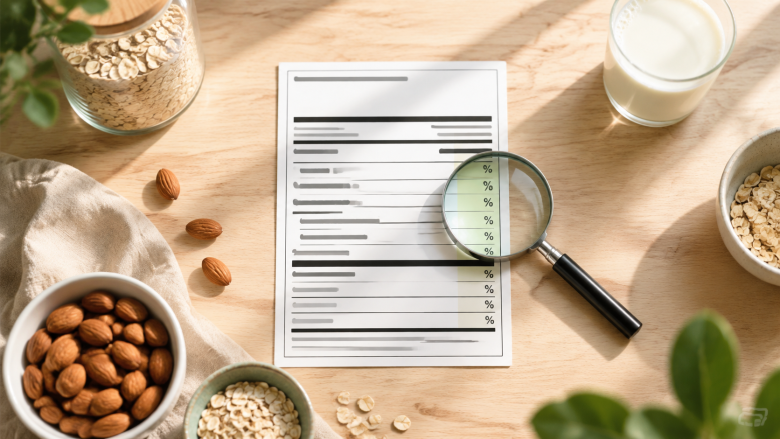
Here's where the magic happens. The 5/20 Rule is a simple guideline for using the % Daily Value (%DV) column on the label. If a nutrient has a %DV of 5% or less, it's considered low in that nutrient. If it's 20% or more, it's high. That's it.
You can use this rule to quickly decide whether a food is a good source of something (like fiber, protein, or vitamins) or whether it's too high in something you want to limit (like saturated fat, sodium, or added sugars). For example, if a cereal has 20% DV for fiber, it's a high-fiber choice. If a frozen pizza has 25% DV for saturated fat, you know it's heavy in the bad stuff.
But here's the thing nobody tells you about the 5/20 Rule: %DV is based on a 2,000-calorie diet. If you eat more or less than that, the percentages won't be perfectly accurate for you. But for most adults, it's a reliable ballpark. The FDA created this system specifically to help consumers compare products without doing math. So use it as a filter, not a precise measurement.
If you're shopping for groceries and want to apply this rule in real-time, our Beginner's Guide to Smart Grocery Shopping covers how to build a list around the 5/20 principle.
Practical Example: Comparing Two Yogurts
Let's put the 5/20 Rule to work. You're standing in the dairy aisle comparing two Greek yogurt tubs:
- Yogurt A - 150 calories, 5g fat (6% DV), 3g saturated fat (15% DV), 16g sugar (includes 8g added sugar - 16% DV), 12g protein, 0% DV for calcium.
- Yogurt B - 100 calories, 0g fat (0% DV), 0g saturated fat (0% DV), 10g sugar (all added - 20% DV), 5g protein, 20% DV for calcium.
Using the 5/20 Rule: Yogurt A has 15% DV for saturated fat (close to high but not over 20%) and 16% DV for added sugar (moderate). Yogurt B has 20% DV for added sugar (high) and only 5g protein. Even though Yogurt B has fewer calories, the high added sugar and low protein make it a worse choice for satiety. The 5/20 rule helps you spot that Yogurt A is actually the better pick - more protein, lower added sugar relative to DV, and decent calcium. Most people would grab the lower-calorie option without realizing the trade-off.
Step 3: Scan the Ingredient List for Hidden Sugars
Now that you've used the 5/20 Rule to filter for good and bad nutrients, it's time to check the ingredient list. This is where hidden sugars, artificial additives, and sneaky oils reveal themselves. The FDA requires ingredients to be listed in descending order by weight, so the first three ingredients make up the bulk of the product.
Added sugars are now required to be listed separately on the Nutrition Facts label, but they can still hide under many names. Look for words ending in "-ose" (sucrose, dextrose, fructose, maltose), plus syrups (corn syrup, brown rice syrup, agave nectar) and anything called "fruit juice concentrate." If you see more than one or two of these in the first five ingredients, that product is loaded with sugar, even if the %DV for added sugar looks moderate.
One common mistake: thinking "no added sugar" means zero sugar. It only means no sugar was added during processing. The product may still contain naturally occurring sugars (like lactose in milk or fructose in fruit). For a beginner, it's more important to watch for added sugars on the label and avoid products where they appear in the top three ingredients.
What About Carbs, Fiber, and Total Carbohydrates?
You'll see total carbohydrates broken down into dietary fiber and sugars (including added sugars). The 5/20 Rule works here too. Aim for 20% or more DV for fiber (good) and 5% or less DV for added sugars (bad). But be careful: total carbs include both fiber and sugar, so don't just look at the total number. A product with 30g total carbs might have 15g fiber and 5g sugar - that's a great choice. Another with 30g total carbs and 25g sugar is terrible.
Most people don't realize that fiber doesn't raise blood sugar the way other carbs do. So when you're comparing two breads, the one with higher fiber and lower added sugar is almost always better, even if its total carb count is higher. The 5/20 Rule makes this comparison instant.
How to Read Nutrition Labels in 5 Steps (Condensed)
If you want a quick checklist, here's the five-step version I give to friends who are overwhelmed:
- Check serving size - adjust the rest of the numbers based on how much you actually eat.
- Use the 5/20 Rule - look for 5% DV or less for things you want to limit (saturated fat, sodium, added sugars) and 20% DV or more for things you want more of (fiber, protein, vitamins).
- Scan added sugars - check the %DV and the gram amount. Aim for <5% DV.
- Read the ingredient list - if the first three ingredients include sugar, refined flour, or hydrogenated oil, put it back.
- Look for protein and fiber - these two nutrients help with fullness and blood sugar stability. A snack with >5g fiber and >10g protein is a win.
That's it. Most labels take less than 60 seconds to evaluate once you're used to these five steps.
Is There an App to Read Food Labels? (Yes, But With Caveats)
Short answer: Yuka and Fooducate are the two most popular apps for scanning barcodes. I've used both, and they each have strengths and weaknesses.
Yuka gives a score out of 100 based on nutrition quality, additives, and whether the product is organic. It's great for a quick thumbs-up or thumbs-down. But I've found it sometimes penalizes foods that are actually balanced (like full-fat yogurt) because it's overly strict on fat content. It also doesn't always have data for smaller brands or store-brand products.
Fooducate grades products from A to D and offers a community-driven database. It's more focused on overall diet and includes a feature to log your meals. However, the interface is a bit busier, and the grading algorithm can be inconsistent - I've seen a sugary granola bar get a B because it had some fiber, while a plain Greek yogurt got a C because it had saturated fat. The app is a helpful guide, but never take its score as gospel.
My advice: use an app as a second opinion, not a final decision. The 5/20 Rule and ingredient scan are more reliable than any app's black-box algorithm. If you're in a hurry, scan the barcode, but always double-check the serving size and added sugars yourself.
Common Mistakes Beginners Make (And How to Avoid Them)
I've made all of these, and I still see friends fall into the same traps:
- Ignoring the 5/20 Rule for fat - "Low fat" doesn't mean healthy. Many low-fat products replace fat with added sugar or starch. Check the %DV for added sugars instead.
- Thinking "no sugar" means low carb - Sugar alcohols (like erythritol, xylitol) and fiber are still carbs, even if they don't spike blood sugar. If you're counting carbs, include them.
- Assuming "natural" or "organic" means nutritious - Organic cane sugar is still sugar. The ingredient list matters more than any wellness claim on the front of the package.
- Not checking the serving size on snack packs - A "single serve" bag of almonds might be 1 oz (about 23 almonds) with 160 calories. But a "snack pack" from the same brand could be 1.5 oz - 240 calories. Always verify.
Advanced Tip: Using the 5/20 Rule for Meal Planning
Once you're comfortable with the basic scan, you can use the 5/20 Rule to build a balanced plate. For example, if you're having a frozen meal that has 25% DV for sodium, plan to pair it with a low-sodium side (like steamed vegetables with no salt). If your breakfast cereal has 20% DV for fiber, you can skip the high-fiber side and instead add a protein source. The rule helps you balance nutrients across a day, not just within a single food.
The FDA's official guide is a great reference, but it's dense. The 5/20 Rule condenses it into something you can actually use in the grocery store without pulling out your phone. I keep a sticky note on my fridge that says: "5% or less is low, 20% or more is high." That's the only cheat sheet you need.
What the 5/20 Rule Doesn't Tell You
No tool is perfect. The 5/20 Rule doesn't account for individual health conditions like high blood pressure (where you'd want sodium even lower than 5% DV) or diabetes (where you'd want to watch total carbs, not just added sugars). It also doesn't differentiate between types of fat - 20% DV for monounsaturated fat is good, but 20% DV for trans fat is terrible. Fortunately, trans fat is now banned in the US, but you may still see it in imported products.
Also, the rule is designed for adults eating roughly 2,000 calories a day. Children, pregnant women, and athletes have different needs. For general healthy eating, it's a fantastic starting point, but don't treat it as a medical prescription.
If you're looking for a tool that calculates specific nutrient goals for you, our Mustard Nutrition Calculator can help you quickly compare condiments and sauces - though it's a niche tool, it shows how you can apply the same principles to any food category.
Putting It All Together: Your 60-Second Label Hack
Here's a quick summary of the entire process, the way I use it every time I pick up a packaged food:
- Seconds 0-10: Check serving size. How many servings do you actually plan to eat?
- Seconds 10-30: Scan the %DV column. Use the 5/20 Rule: look for <5% for saturated fat, sodium, and added sugars; look for >20% for fiber, protein, and vitamins.
- Seconds 30-60: Flip to the ingredient list. If added sugar appears in the first three ingredients, put it back. If the first ingredient is a whole food (like whole wheat, oats, or beans), you're on the right track.
That's it. You don't need to memorize the nutrient-by-nutrient breakdown the FDA provides. The 5/20 Rule is your shortcut. The ingredient list is your reality check. And an app like Yuka can be a helpful backup, but never a substitute for your own eyes.
I've been using this method for years, and it has saved me countless hours of confusion and regret. Next time you're in the grocery store and feel overwhelmed, take a deep breath, look for the %DV, and apply the 5/20 Rule. You'll be surprised how quickly you can spot the difference between a genuinely healthy product and one that just looks healthy on the front.