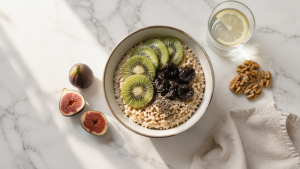
Last Tuesday evening, as the light faded through the kitchen window, I sat down to a simple bowl of soup and realized how often I eat on autopilot—scrolling, rushing, missing the warmth in my hands from the bowl. That moment pulled me back, reminding me that meals can be a quiet anchor in the day. These tips come from those small rediscoveries at my own table, ways to bring a gentle awareness that leaves you feeling steady and nourished.
Clearing Space for a Quiet Start
I remember one cluttered Thursday night when papers, mail, and my phone covered half the table, turning dinner into a distracted shuffle. I pushed everything aside, dimmed the overhead light, and placed a small plant from the windowsill nearby. That simple shift made the space feel like an invitation rather than a chore.
Start by wiping the table smooth—no lingering work notes or buzzing devices. Soft lighting helps too; I swap the bright bulb for a lamp with a warm glow. Adding a candle or that plant brings a touch of calm without effort.
Over time, this became my evening ritual. It turns the table into a place for presence. Even on rushed days, clearing just takes a minute but sets a steady tone.
When I began following ideas from how to organize your kitchen for easy healthy eating, keeping the table clear felt even more natural. Surfaces stayed ready, meals started peacefully. No more digging through clutter mid-bite.
Try placing a cloth napkin or favorite mug nearby. These small touches ground you. The space whispers, "Settle in here."
One weekend, after a long week, I lit a candle and noticed how the flame danced softly. It pulled my attention away from the day's worries. Meals after that felt less like fuel, more like a pause.
Keep it simple—no need for fancy setups. Your everyday table works fine. Just breathe into the openness you've created.
The Simple Breath Before Your Fork Lifts
During a busy weekday lunch last month, I grabbed my sandwich while checking emails, fork—no, hand—lifting without a thought. Halfway through, I felt unsettled, not truly fed. Pausing for a breath changed that rushed feeling into something calmer.
Sit down, close your eyes for a second, and inhale slowly for four counts. Let the air fill you gently. Notice the aromas rising from your plate—herbs, warmth, earthiness.
This breath acts like a soft reset. It eases the pull to hurry. I found my meals stretched out naturally, flavors landing deeper.
Exhale fully, feeling your shoulders drop. Now lift the fork. That tiny gap between sitting and starting makes all the difference.
Pairing this with a quiet corner, like the one I set up using how to set up a simple meditation space, deepened the calm even more. The breath became a bridge to the meal. No force, just ease.
On days when my mind races, this breath pulls me back. It's become my go-to for steadying lunch breaks. Try it next time you're at the table.
Inviting Your Senses to the Table
On a quiet Sunday, I lingered over a salad—crisp greens, vibrant tomatoes, a drizzle of oil. Instead of rushing, I looked at the colors, felt the textures change with each chew. It turned eating into a full experience, leaving me content rather than stuffed.
Start with sight: scan your plate, note the hues and shapes. Steam rising, juices glistening—they're part of the moment. This awakens curiosity before the first bite.
Smell comes next; lean in slightly. The scents prepare you, stirring appetite mindfully. Then touch: fork to food, the weight, the give.
Chew slowly, twenty times if you can. Feel flavors unfold—sweet, tangy, earthy shifts. Swallow with awareness, then pause.
Texture stands out too: crunch of veggies, softness of grains. These details make meals vivid. I noticed how a simple stir-fry came alive this way.
Over weeks of trying this, rushed bites faded. Even quick dinners felt richer. Your senses become quiet guides.
Sounds matter subtly—the crunch, the sip. Let them weave in without forcing. It's a gentle immersion, meal by meal.
When sitting comfortably matters, drawing from easy posture tips for desk workers helped me stay relaxed at the table. Upright yet loose, senses flowed freely. No tension blocking the joy.
Handy Checklist: Quick Wins I Keep Handy
These are the habits that stuck for me over months of evenings at the table. They're straightforward, no big changes needed. Pick three to weave in first—they add up gently.
- □ Clear the table of distractions before sitting down.
- □ Take three slow breaths to settle in.
- □ Look at your plate—notice colors and steam rising.
- □ Chew each bite 20 times, feeling the changes.
- □ Pause midway: Am I still hungry or just habit?
- □ Sip water mindfully between bites.
- □ Express quiet thanks for the food.
- □ End with a full breath, noting how you feel.
- □ Put utensils down between bites.
- □ Savor one flavor fully before the next.
I taped a version of this near my fridge at first. Now it's habit. They turn autopilot meals into aware ones effortlessly.
What Helped Me, What Might Help You
Family dinners used to leave me restless, picking at food while conversations swirled. Bringing mindful pauses steadied those evenings. I felt present, connected without strain.
Energy shifted too—no heavy slumps after. Meals fueled me evenly through the afternoon. It was subtle, but real.
One reflection: during holiday gatherings, this practice cut through the chaos. I savored bites amid chatter. Others noticed my calm.
For you, it might ease that post-meal fog. Or make solo suppers warmer. Start where it feels kindest.
Restless nights improved when dinners wound down mindfully. No overeating from distraction. Sleep came easier, body settled.
These shifts built over time. No rush, just steady presence. Trust your own table's rhythm.
A Gentle Experiment: One Week at Your Table
For five days, try the mid-meal pause: at halfway, set down your fork, wait two minutes. Ask if hunger lingers. Resume only if it does, or stop gracefully.
I did this last spring—noticed I often ate from habit, not need. Portions felt right, satisfaction deeper. Jot notes after: full, content, or still reaching?
Keep a small journal nearby. Simple words like "calm" or "rushed" capture it. By day's end, patterns emerge softly.
This experiment invites curiosity, not rules. See what your body shares. It might surprise you gently.
What small shift at your next meal feels inviting? Jot it down tonight and see what unfolds.
Frequently Asked Questions
What's the difference between mindful eating and just eating slowly?
Mindful eating brings a gentle awareness to your body's signals and the present moment, going beyond pace alone. It's about tuning in without pressure, feeling the experience fully. Speed helps, but presence deepens it.
Can I do this with kids or a busy family dinner?
Yes, begin small—a shared breath together or phones aside for the first course. It spreads calmly as everyone joins in naturally. No need for perfect silence; the ripple builds over meals.
What if my mind wanders during the meal?
That's completely normal; minds drift like clouds. Gently return with one breath, without judgment. It's a kind practice, easing back in each time.
Does this help with feeling overly full or restless after eating?
Many find a steadier sense of fullness emerges, tuning into cues naturally. That restless edge often softens as awareness guides portions. It varies, but presence helps listen inward.
How do I remember these tips when life's hectic?
Stick the checklist on your fridge or set a gentle phone chime before meals. Keep one tip as your anchor, like the breath. It lightens over time into habit.
Is there a best time to start practicing?
Any meal works—start with breakfast when the day feels fresh. Or evenings for wind-down. Choose what draws you without force.
What if I'm eating something quick like a snack?
Even snacks invite this: pause, notice, savor one bite fully. It bridges to fuller meals. Small moments count.